
Wrought Iron Fence Maintenance: A Step-by-Step Rust Prevention and Seasonal Care Guide
If you own a pool, your fence is not decoration. It is the barrier between a curious toddler and the water, and it has to work every single day. That is why wrought iron fence maintenance matters more for pool owners than for anyone else. A rusted hinge that keeps a gate from self-closing, or a corroded latch that no longer catches, is not a cosmetic problem. It is the exact kind of thing an inspector flags and the exact kind of thing a parent loses sleep over. Pool fence rust prevention is essential to keeping that barrier functional and safe.
Wrought iron is one of the most durable fence materials you can put around a pool, and plenty of Knoxville homeowners choose it because decorative wrought iron fence panels look better than standard aluminum fence sections. The trade-off is simple: iron rusts, aluminum does not. If you want the upscale look, you take on a maintenance routine. The good news is that the routine is manageable. Here is the step-by-step version, built around East Tennessee's wet springs and freeze-thaw winters.
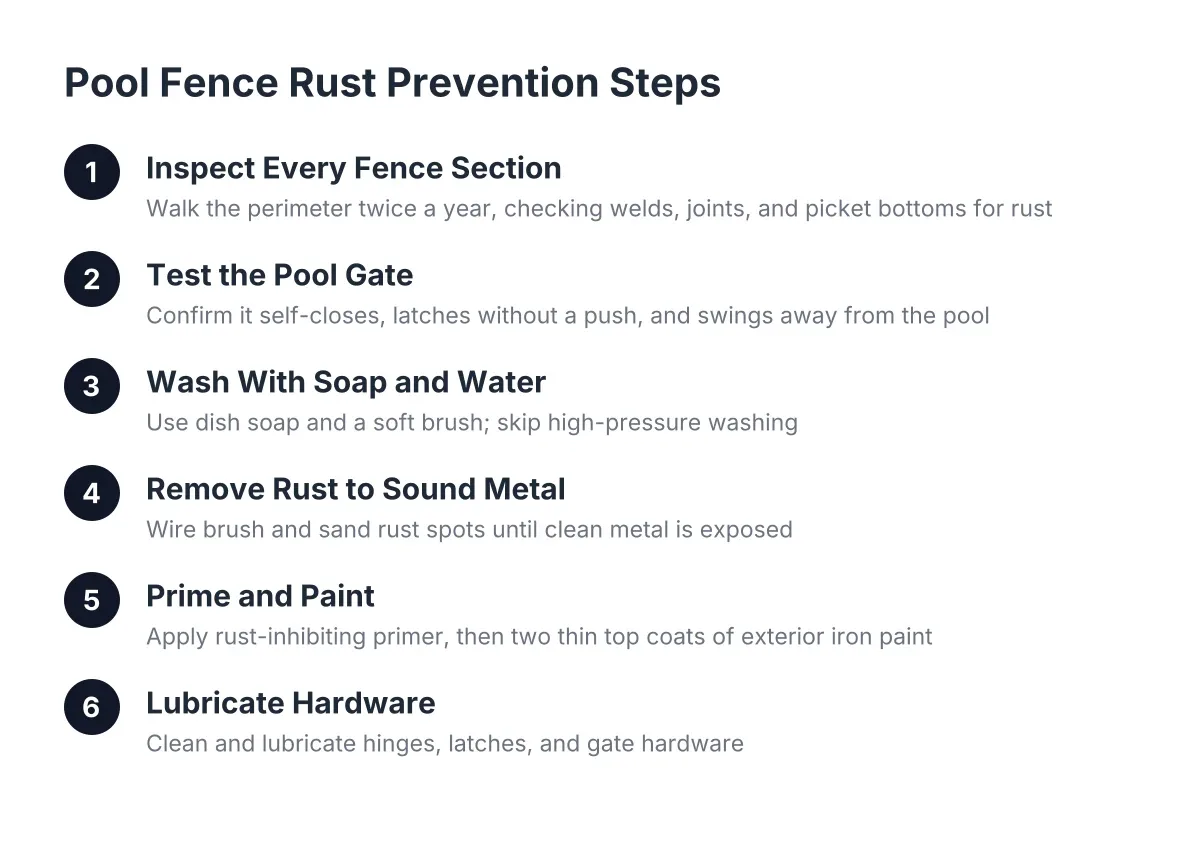
Step 1: Walk the Fence Line and Inspect Every Section
Start with a slow walk around the full perimeter, twice a year at minimum. Early spring and late fall work well in Knoxville because you catch damage from winter freeze-thaw cycles and from heavy spring rain before it spreads.
Look for these specific problems:
- Rust spots or bubbling paint, especially at welds and joints where water collects
- Chipped or peeling paint that exposes bare metal
- Loose or wobbly posts, which are common in clay soil that swells when wet and shrinks when dry
- Bent or cracked pickets and rails
- White or orange staining running down from fasteners
Pay extra attention to the bottom few inches of each picket. Splash-back from rain, sprinkler overspray, and pool water with chlorine all concentrate near the ground. On a wrought iron fence around a pool, chlorinated splash accelerates corrosion faster than homeowners expect, so the poolside face of the fence usually fails first. Understanding how pool fence rust develops helps you target your prevention efforts.
Step 2: Test the Pool Gate Before Anything Else
The pool gate is the single most important part of a swimming pool fence, so test it before you touch a wire brush. Open the gate to about 45 degrees and let it go. It should swing shut on its own and latch without you touching it. Then try it from a few inches open, because a gate that only latches from a wide swing will fail in real life and can fail an inspection.
Check these four things:
- The gate self-closes from any open position
- The latch catches and holds without a push
- The latch release sits high enough that a small child cannot reach it
- The gate swings away from the pool, not toward it
However, do not guess at the exact height and latch requirements for your property. Codes vary, and as of 2026 inspectors in different jurisdictions apply barrier rules differently. If you are facing an inspection deadline, confirm the current requirements with your local building department or a local fencing contractor who handles pool gate installation regularly. Rust is the most common reason a self-closing gate stops self-closing, which is why gate hardware gets its own step later in this guide.
Step 3: Wash the Fence With Soap and Water
Next, clean the entire fence with a bucket of warm water, a few drops of dish soap, and a soft brush or sponge. This removes dirt, pollen, and the grime East Tennessee humidity leaves behind, and it exposes rust spots that were hiding under the film.
Skip the pressure washer, or keep it on a wide, low-pressure setting from several feet away. High pressure strips protective paint and drives water into joints and hollow sections where it sits and rusts from the inside. Rinse with a garden hose and let the fence dry fully before the next step. On a humid summer day in Knoxville, give it a few hours.
Step 4: Remove Rust Down to Sound Metal
Once the fence is dry, attack every rust spot you found. Use a wire brush for loose, flaky rust, then sandpaper (medium grit, then fine) to feather the edges until you reach clean metal. For heavy scale, a wire wheel on a drill speeds things up.
The goal is sound metal, not bare perfection across the whole fence. Rust under paint keeps spreading, so any spot you paint over without cleaning first will bubble back within a season. Wipe the sanded areas with a rag and a little mineral spirits to pull off dust before priming.
For example, suppose a homeowner in West Knoxville bought a house with an existing iron pool fence and found orange streaks at a dozen weld points during the spring walk-through. A Saturday with a wire brush, sandpaper, and primer handles that. If instead the pickets flex when pushed or rust has eaten through the metal, that has moved from maintenance into wrought iron fence repair, and a welder or fence company should look at it before you spend money on paint.
Step 5: Prime and Paint Exposed Metal
Apply a rust-inhibiting metal primer to every spot of bare metal, then top-coat with a paint made for exterior iron. Two thin coats beat one thick coat; thick paint drips, cures unevenly, and chips sooner. Brush application gives better coverage on ornate decorative panels than spray, because spray misses the back edges of scrollwork.
Plan painting for a dry stretch with moderate temperatures. Paint applied in high humidity or right before rain will not cure properly, and in East Tennessee that rules out a fair number of spring weekends. Most iron fences need full repainting every few years, with spot touch-ups in between. Staying ahead of touch-ups is the core of wrought iron fence maintenance, because the paint film is the only thing standing between the iron and rust.
Step 6: Lubricate Hinges, Latches, and Gate Hardware
Now return to the gate. Clean the hinges and latch mechanism, then apply a silicone-based or dry lubricant. Avoid heavy grease outdoors; it traps grit and clay dust, which grinds the mechanism down over time.
Work the gate through its full swing a dozen times after lubricating. Watch the self-closing mechanism: if the gate hesitates, slams, or stops short of latching, adjust the closer tension per the manufacturer's instructions. Check that every screw and bolt on the hinges and latch is tight. Gate hardware carries all the stress on a fence, and on a pool fence it is also the part that keeps kids out of the water. Treat wrought iron gate maintenance as a quarterly task, not an annual one, because a gate that worked in April can sag out of alignment by August.
Pool Fence Rust Prevention Through Ground Contact Management
In addition to the metal itself, inspect where the fence meets the ground. Knoxville's clay and rocky soil moves with moisture, and sloped lots common in the foothills put uneven loads on posts. Push on each post; any movement means the footing has loosened or cracked.
Look for soil or mulch piled against the bottom rail. Constant ground contact holds moisture against the iron and rusts it from the bottom up. Pull mulch back a couple of inches and make sure water drains away from the fence line instead of pooling at the posts. Concrete footings that have cracked from freeze-thaw cycles need professional attention, because a leaning post throws the gate out of alignment and breaks the self-close function.
Step 8: Set a Seasonal Wrought Iron Fence Maintenance Schedule
Finally, put the routine on a calendar so it actually happens. A workable East Tennessee schedule looks like this:
- Spring: Full inspection, wash, rust removal, and touch-up painting after the heavy rains
- Summer: Quarterly gate test and lubrication; rinse pool-side sections to remove chlorine splash
- Fall: Second inspection, clear leaves and debris from the fence line, final gate check before winter
- Winter: Visual checks after hard freezes; avoid letting snow or ice pile against posts and gates
This schedule takes a few hours per season on a typical residential pool enclosure. Compare that honestly to an aluminum fence, which needs an occasional wash and gate check and nothing else. If the maintenance routine is a dealbreaker, aluminum gives you a similar open-picket look around a pool without the rust risk. That trade-off between appearance and upkeep is one of the real cost factors in choosing between the two, beyond the price per foot.
When Maintenance Is Not Enough
Routine care handles surface rust and hardware wear, but some problems are beyond a homeowner weekend. Rust that has eaten through pickets, posts that lean after footing failure, or a gate frame that has racked out of square all call for fence repair by someone who works on iron and gates regularly. The same goes for any uncertainty about pool barrier compliance; an inspection deadline is a bad time to find out the latch height is wrong.
The payoff for staying on top of this is real. A well-maintained iron fence can outlast every other residential fence material, keep its decorative character for decades, and, most importantly for a pool owner, keep a self-latching gate doing its one critical job every time a grandkid heads for the backyard.
If you need fence installation, Knoxville Fence Builders can help.
Prefer to talk it through? Call (865) 419-3997 — a quick call is usually the fastest way to get a straight answer for your situation.