
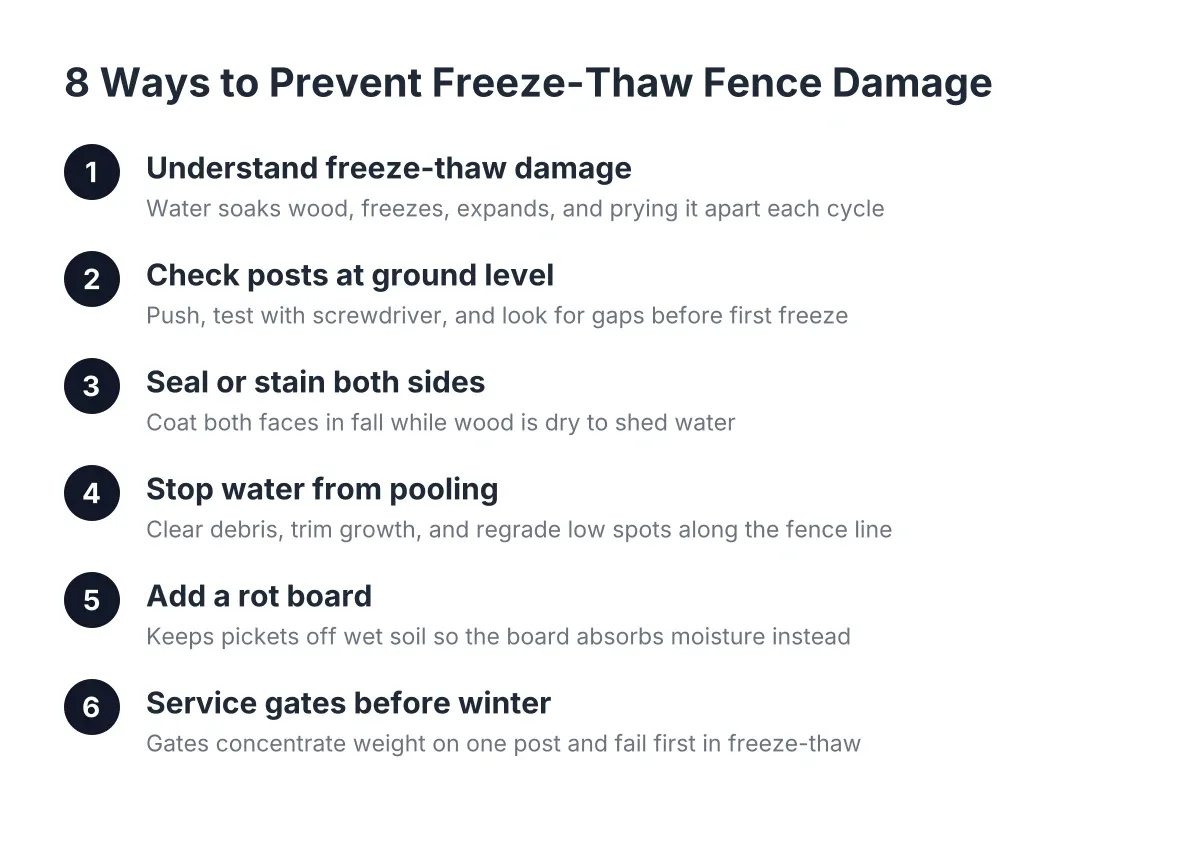
Wood Fence Maintenance for Freeze-Thaw Winters: 8 Ways to Stop Rot and Gate Damage
East Tennessee winters rarely stay frozen for long, and that is the problem. Knoxville yards cycle between freezing nights and mild, wet days all season, so wood fence maintenance for freeze-thaw conditions matters more here than in places with one long, dry cold snap. Water soaks into posts and pickets, freezes, expands, and pries the wood apart a little more each cycle. Understanding freeze-thaw fence maintenance is essential if you are planning your first privacy fence, or if you own a few rentals and want fences that last between tenants—the eight habits below will save you from the two most expensive winter failures: rotted posts and sagging gates.
This matters at the planning stage, not just after the fence is built. Several of these tips are decisions you make before installation, which is exactly when a first-time fence buyer has the most leverage over how long the fence lasts.
1. Understand Why Freeze-Thaw Cycles Damage Wood Fences
Freeze-thaw damage happens when water inside wood or soil freezes, expands, and then melts, over and over. In Knoxville, a January week can swing from a hard freeze overnight to rain and mud by afternoon. Each cycle pushes moisture deeper into unsealed wood and shifts the clay soil around your posts.
Two parts of a wood fence take the worst of it. First, the posts, because they sit in wet ground where freezing soil can heave them upward or loosen them. Second, the gates, because a gate hangs its full weight on one post; when that post shifts even slightly, the gate starts dragging or refusing to latch.
Knowing this changes how you inspect. Do not just look at the pickets. Grab each post and push on it, and swing every gate, because that is where winter does its quiet damage.
2. Check Your Posts at Ground Level Before the First Freeze
Posts rot where wood meets soil, not up where you can see it. A fence can have clean, freshly stained pickets and still be one storm away from leaning, because the posts failed at ground level while the panels looked fine. Fall is the time to catch this, before freezing soil locks a weakened post in place or heaves it loose.
Here is a quick test anyone can do:
- Push firmly on each post from both directions; more than slight movement means the footing or the post is compromised.
- Press a screwdriver into the post right at the soil line; if it sinks in easily, the wood is softening.
- Look for soil pulled away from the post or a visible gap around the base, a sign water is pooling there.
- Check for pickets that have dropped or rails that have separated from the post, which often points to post movement.
Suppose a landlord owns a duplex in Powell and finds two soft posts during a fall walkthrough. Catching that in October means a straightforward fence repair. Finding it in February, after a freeze has leaned the whole run, often means replacing panels too.
3. Seal or Stain Both Sides for Freeze-Thaw Fence Maintenance
Staining or sealing is the single biggest thing you control for wood fence maintenance before a freeze. Sealed wood sheds water instead of absorbing it, and wood that holds less water suffers less expansion damage when temperatures drop. The mistake most first-time fence owners make is coating only the street-facing side.
However, moisture does not care which side looks nicer. Water wicks into the back of pickets, into end grain at the top, and into every unsealed cut. Coating both sides extends the working life of the fence by years, which matters whether you are protecting your own privacy fence or holding down cost per door across a rental portfolio.
Timing matters too. Apply stain or sealer in fall when the wood is dry and daytime temperatures are mild. Sealing wet wood traps moisture inside, which is worse than not sealing at all.
4. Keep Water From Pooling at the Fence Line
Standing water at the base of a fence is the fuel for freeze-thaw damage. East Tennessee gets heavy spring rain, and Knoxville's clay soil drains slowly, so water that pools along a fence line in November can sit there freezing and thawing all winter. The fix is mostly about housekeeping and grading.
Walk the fence line after a hard rain and note where water collects. Then take these steps:
- Rake leaves and debris away from the bottom of the fence so pickets are not sitting in a wet mat all winter.
- Trim grass and shrubs back so air can circulate and dry the wood after rain.
- Regrade low spots or add soil so water flows away from posts instead of settling against them.
- Keep mulch beds from piling up against pickets, since mulch holds moisture against the wood.
In addition, if your lot slopes, as many Knoxville foothill yards do, pay attention to the downhill posts. They catch runoff from the whole yard and usually rot first.
5. Add a Rot Board So Pickets Never Touch Wet Ground
A rot board is a horizontal pressure-treated board that runs along the bottom of the fence, under the pickets. The pickets sit on it instead of near the soil. When ground water pools during a winter thaw, the rot board absorbs the contact, not your cedar pickets, which would otherwise wick moisture up from the bottom edge.
This is a planning decision more than a maintenance task. If you are comparing quotes for wood fence installation right now, ask each fence company whether a rot board is included and what it costs to add. Replacing a rot board years from now is cheap. Replacing the bottom third of every picket because they wicked up water is not.
For a landlord fencing a rental backyard, a rot board is one of the few upgrades that pays for itself in fewer repair calls, with no change to how the fence looks from the yard.
6. Service Gates Before Winter, Because Freeze-Thaw Damage Hits Them First
Gates fail before fence panels do in a freeze-thaw winter. A gate concentrates weight and motion on one hinge post, so when winter soil movement shifts that post even a half inch, the gate sags, drags, or stops latching. A gate that gets forced closed all winter loosens its own hinges and splits its own frame.
Before the first freeze, do a short gate checkup:
- Tighten every hinge and latch screw; seasonal wood movement works them loose.
- Check that the gate swings freely without touching the ground at any point in its arc.
- Look at the hinge post specifically; if it leans even slightly, fix it now, because freezing soil will make it worse.
- Add a diagonal brace or tension cable if the gate frame has started to rack out of square.
For rental properties, gates deserve extra attention because tenants will keep using a dragging gate until it fails completely. A fall hinge adjustment costs little; a rebuilt gate and new hinge post in February costs much more, and a pool gate that will not latch is a liability problem, not just a repair.
7. Know How Concrete Footings Behave in Freezing Clay
Concrete around a post is not automatically protection. Poorly drained concrete footings can hold water against the wood like a cup, and that trapped moisture is exactly what freeze cycles exploit. Knoxville's clay makes this worse because the surrounding soil drains slowly, so water that gets between the post and the concrete has nowhere to go.
What to watch for on an existing fence: a gap between the post and its concrete collar, concrete that sits below grade where water can pool on top of it, or a post that rocks inside a footing that itself has not moved. Any of those means water is getting in and winter will widen the damage.
If you are at the quote stage instead, ask how the installer handles drainage at the footing. Details like crowning the concrete so water sheds away from the post, or using gravel at the base of the hole, are the kind of specifics that separate a careful local fencing contractor from a crew racing to the next job.
8. When a Post Fails, Repair Smart Instead of Replacing Everything
A rotted post does not have to mean a new fence. When a post rots at ground level but the concrete footing is still solid, one common approach is to cut the post above the damage and set a new post, often steel, into the existing footing. That keeps the fence standing without the cost of demolition, and the repair effectively carries forward if you later replace the whole run.
This matters for budgeting. A first-time fence owner facing one leaning post in January can often get a targeted fence repair instead of a replacement quote. A landlord with aging fences at several properties can triage: repair the fences with sound footings, and schedule full replacement only where the structure is truly gone.
That said, if more than a few posts have failed, or the rails and pickets are splitting along the whole run, patching becomes more expensive than replacing. A local fencing contractor can tell you where that line is for your specific fence; this is one judgment call worth getting professional eyes on rather than guessing.
What Winter Maintenance Means for Your Fence Budget
Freeze-thaw upkeep is part of the real cost of owning a wood fence, so build it into your comparison before you buy. Wood is usually the cheaper fence upfront; according to Angi, wood fence installation runs about $11 to $45 per linear foot for professional work, with typical projects landing between $1,920 and $4,820. HomeGuide puts wood fence cost at $20 to $50 per linear foot, and notes that higher upkeep can make wood more expensive than vinyl over the long run, since a vinyl fence runs $30 to $60 per linear foot but needs little maintenance after that.
Therefore, when you run numbers through a fence cost calculator or any fence installation cost calculator, add a line for stain or sealer every few years and occasional gate hardware. Those are national 2026 figures, not Knoxville quotes; your price will move with your yard's slope, soil, and layout. For a homeowner who wants the warmth of real wood and does not mind a fall maintenance weekend, wood remains the better value. For a landlord managing a half dozen rentals, the math may favor vinyl fence or chain link fence options precisely because winter upkeep across multiple addresses adds up.
Either way, the pattern holds: wood fence maintenance ahead of each freeze season, focused on posts, gates, and drainage, is what decides whether your fence lasts a decade or needs major repairs by year five. The fence that gets a fall inspection and a coat of sealer on both sides outlives the neglected one by years, and in a freeze-thaw climate like East Tennessee's, that gap is the whole game.
If you need wood fence installation, Knoxville Fence Builders can help.
Prefer to talk it through? Call (865) 419-3997 — a quick call is usually the fastest way to get a straight answer for your situation.