
Wood Fence vs Vinyl vs Aluminum: Which Holds Up Best in East Tennessee?
You have decided to fence your Knoxville yard. Now comes the question that actually determines how the next 15 to 30 years go: wood fence, vinyl, or aluminum? Each material handles East Tennessee weather differently, and the right answer depends on what your fence needs to do. A privacy fence along a disputed property line has a different job than a swimming pool fence with a self-latching pool gate. This guide walks through a fence material comparison in Tennessee—how each material performs in our climate, what it costs to keep up, and how to place it so you never have to move it.
One note before the material comparison. If you are building because a neighbor just put up their own fence, or because you two disagree about the line, the material matters less than the placement. We cover that at the end, because a fence on the wrong side of the line is a problem no material can fix.
Why East Tennessee Weather Is the Real Test
Knoxville sits in a climate that stresses fences from several directions at once. Summers are humid, which feeds rot and mildew in untreated wood. Winters bring freeze-thaw cycles that heave posts set too shallow and work gate hinges loose. Spring rain saturates the clay soil common across Knox County, and saturated clay holds moisture against wood posts for weeks at a time.
The ground itself matters too. Clay and rocky soil change how deep posts can go and how well concrete footings drain. Sloped lots, common in the foothills neighborhoods, force fences to either rack with the grade or step down in sections. Each material handles slope differently, which we will get to.
Therefore, the question is not which material is best in a catalog. It is which material survives wet clay, humid summers, freeze-thaw winters, and your specific lot.
Wood Fence Durability in the East Tennessee Climate
A wood fence in East Tennessee typically lasts 15 to 20 years when built with pressure-treated posts and maintained on schedule, though unmaintained wood can fail in under a decade. Humidity and wet clay soil are the main enemies. Posts rot at the ground line, and pickets warp, twist, and gray without regular sealing.
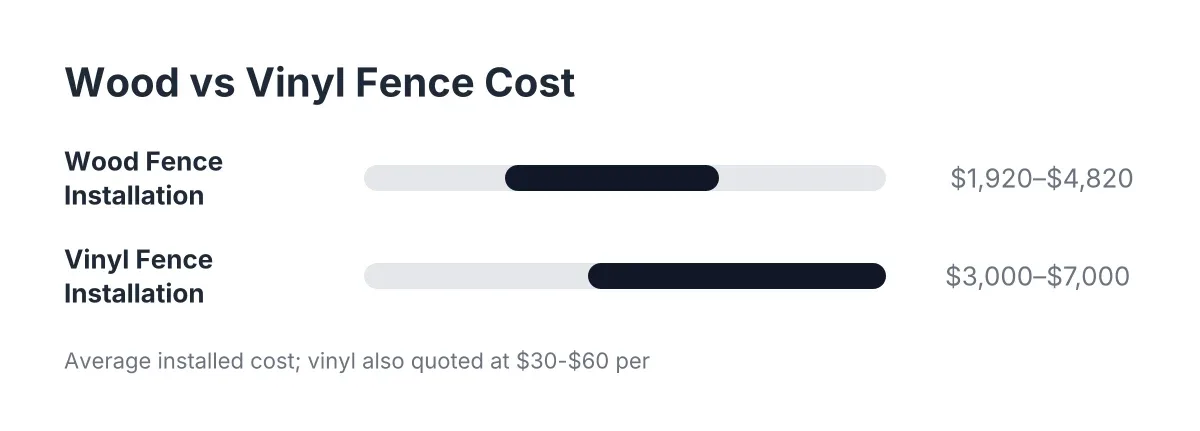
Wood remains the most popular choice in Knoxville for a reason. It is the natural pick for a full privacy fence, it looks right on both older in-town lots and newer subdivisions, and it is usually the cheapest option upfront. According to Angi, wood fence installation costs $1,920 to $4,820 on average, while vinyl runs $3,000 to $7,000.
However, wood asks for ongoing work in our climate:
- Staining or sealing every two to three years to block moisture
- Checking posts at the ground line, where rot starts first
- Replacing warped or cupped pickets as humidity cycles them
- Re-setting gates that sag after freeze-thaw winters shift the posts
The posts are the weak point. A homeowner can repaint wood fence panels faithfully for years and still lose the fence because the posts rotted below grade, where no one was looking. In wet clay, post rot is the most common reason a wood fence comes down early. Good installation helps: posts set deep enough, concrete crowned to shed water away from the wood, and pressure-treated lumber rated for ground contact.
What Is the Best Wood for a Fence in Tennessee?
Pressure-treated pine is the most practical fence wood for Tennessee's humid climate because the treatment resists rot and insects at a reasonable cost. Cedar resists decay naturally and warps less, but costs more. For most Knoxville yards, pressure-treated posts with either treated or cedar pickets is the balanced choice.
Redwood sits at the premium end. It resists rot naturally and holds its color well, but its price keeps it rare in East Tennessee compared to treated pine and cedar. Whatever species you choose, the sealing schedule matters more than the lumber label. An unsealed cedar fence in a wet Knoxville spring will gray and check faster than a treated pine fence that gets stained on time.
How Vinyl Compares to Wood for Durability
Vinyl fencing outlasts wood in East Tennessee with far less work, typically running 20 to 30 years without staining, sealing, or rot. It shrugs off the humidity and rain that attack wood. The trade-off is a higher upfront price and fewer repair options when a panel does crack.
Vinyl does not rot, and it does not feed mildew the way bare wood does. A rinse with a hose handles most of its maintenance. According to HomeGuide, a vinyl fence costs $30 to $60 per linear foot installed, and its low upkeep often makes it more cost-effective than wood over the fence's life even though wood is cheaper on day one.
The structure of a vinyl fence lives in its posts. The posts are the foundation of the whole system; the panels get their strength from them. That is why corner and end posts are built thicker than standard line posts, and why installers sometimes reinforce a post with a metal pipe inside the vinyl sleeve in tricky spots, such as where a new fence butts against a neighbor's existing fence. For the Knoxville homeowner building along a shared line, that detail matters more than it sounds.
Vinyl has real limits. It is still PVC. Extreme heat or fire can damage it in ways wood and aluminum resist differently. A hard impact, say a mower or a falling limb, can crack a panel, and cracked vinyl gets replaced rather than patched. On steep foothill slopes, vinyl panels step down the grade rather than following it smoothly, which some homeowners dislike visually. Experienced installers also adjust their build direction on slopes so pickets do not slide downhill during assembly, which is one of several reasons vinyl rewards professional installation.
Aluminum Fence Performance and Fence Material Comparisons in Tennessee
An aluminum fence is the most weather-proof of the three in East Tennessee, lasting 30 years or more because it cannot rot, and it resists rust far better than steel. It handles humidity, rain, and freeze-thaw cycles without maintenance beyond an occasional rinse. Its limits are privacy and wind-blocking, which it does not provide.
Aluminum is an open-picket fence. You can see straight through it, which rules it out if your goal is screening a neighbor's yard. Where it wins is longevity, slope handling, and pools.
Aluminum panels rack, meaning they angle to follow a grade instead of stepping down it. On the sloped lots common around Knoxville, that produces a clean line with no triangular gaps at the bottom. Those gaps matter for more than looks.
For pool owners, they matter for code. If you are installing a pool in 2026, your inspector will check fence height, the gap under the fence, spacing between pickets, and the pool gate. The gate must self-close and self-latch, with the latch positioned so a small child cannot reach it. Aluminum pool fence systems are built around those requirements, which is why pool contractors so often point homeowners toward aluminum for the swimming pool fence scope.
Suppose a homeowner in Farragut is finishing a pool install with an inspection date three weeks out. In that scenario, the fastest path to passing is usually an aluminum fence with a self-closing, self-latching pool gate, because the panels rack with the yard's grade and the hardware is designed for the code checklist. A wood privacy fence can also satisfy pool code if built to the height and gap rules, but the gate hardware and ground clearance take more attention, and a sagging wood gate can fail a re-inspection later. Pool barrier rules vary by jurisdiction and change over time, so confirm current requirements with your local codes office or inspector before building.
Wood, Vinyl, and Aluminum Side by Side
Here is the short version of how wood fence, vinyl, and aluminum compare on the factors that matter most in East Tennessee:
- Lifespan: wood 15 to 20 years with upkeep; vinyl 20 to 30 years; aluminum 30 plus years
- Maintenance: wood needs staining every two to three years; vinyl and aluminum need occasional cleaning
- Humidity and rain: wood is vulnerable to rot, especially at the posts; vinyl and aluminum are unaffected
- Freeze-thaw: all three depend on proper post depth; wood gates sag first
- Privacy: wood and vinyl offer full privacy panels; aluminum does not
- Slopes: aluminum racks best; wood can be built to follow grade; vinyl usually steps
- Pool code: aluminum is the easiest fit; wood and vinyl can comply with the right gate hardware
- Upfront cost: wood lowest, vinyl and aluminum higher; long-term costs often reverse that order
A comparison of fence material options in Tennessee shows that pricing reflects more than materials and labor. Construction style, post setting method, expected longevity, and site conditions all drive the number. Two quotes for the same length of fence can differ because one crew sets posts deeper in concrete and the other does not. Ask what is behind the price, not just what the price is.
Place the Fence Right Before You Pick the Material
A correctly placed fence line matters more than the material on it, because a fence built over the property line may have to be moved at your expense. Before any wood fence installation starts, confirm the line with a survey or existing pins, check local setback rules, and get written HOA approval if one applies.
This is the step too many Knoxville homeowners skip, especially when a neighbor dispute is already simmering. If you and the neighbor disagree about where the line sits, do not let anyone dig until that question is settled. A survey costs money on top of the fence, but it is cheap insurance against tearing out and rebuilding a fence you already paid for. Keep the survey, the HOA approval, and your installation records together; that paperwork is your documentation if the dispute resurfaces years later.
A few placement specifics for Knoxville and surrounding East Tennessee areas:
- Find your property pins or order a survey if the line is unclear. Do not build from a fence the neighbor installed; their fence may not sit on the line either.
- Check whether your jurisdiction requires a fence permit. Requirements differ between the City of Knoxville, Knox County, and nearby towns, and pool barriers almost always involve inspection.
- Submit to your HOA before scheduling installation. Many HOAs restrict height, material, and which side faces out.
- Decide how far inside your line to build. Setting the fence slightly inside your boundary keeps the entire structure clearly yours.
- Talk to the neighbor before the crew arrives. A short conversation about the survey results prevents most shared-fence disputes before they start.
A good local fencing contractor should flag an unclear boundary rather than build wherever they are pointed. If the company quoting your job never asks about pins, surveys, or HOA rules, that silence tells you something.
How to Choose Between Wood, Vinyl, and Aluminum
Match the material to the fence's job, your maintenance tolerance, and your lot. Searching for wood fence installation near me will surface plenty of crews; the material decision is the part you should settle first.
Choose wood if you want full privacy at the lowest upfront cost and you will keep up with staining. It fits Knoxville's older neighborhoods and gives you repair flexibility; individual wood fence panels and pickets can be swapped as they age.
Choose vinyl if you want privacy without the maintenance schedule and can pay more upfront. It is the strongest answer for homeowners who have watched a wood fence rot once and do not want to repeat it.
Choose aluminum if you need a pool fence, have a sloped yard, or want the longest lifespan and do not need privacy. For a code-compliant pool gate on a deadline, it is usually the straightest path.
Whatever you pick, settle the property line first, get the HOA and permit questions answered in writing, and ask your installer how they set posts in clay. In East Tennessee, those three things decide whether your fence lasts its full lifespan or becomes next spring's repair project.
If you need wood fence installation, Knoxville Fence Builders can help.
Prefer to talk it through? Call (865) 419-3997 — a quick call is usually the fastest way to get a straight answer for your situation.