
Setting Wrought Iron Fence Posts in Knoxville’s Rocky Clay Soil: FAQ
If you are pricing a wrought iron fence in Knoxville, TN, the posts are where the job succeeds or fails. Every wrought iron fence post has to fight East Tennessee's rocky clay soil, freeze-thaw winters, and heavy spring rain. Setting fence posts in clay soil requires understanding how these conditions affect the installation process. This FAQ answers the questions buyers ask most before hiring a local fencing contractor: how posts get set in hard ground, what the service includes, who handles property line questions, and how to compare quotes.
Why does Knoxville's rocky clay soil make wrought iron fence post setting harder?
Knoxville's rocky clay soil makes wrought iron fence post setting harder because clay holds water, swells when wet, and shrinks when dry, which pushes on footings all year. Rock near the surface also slows digging and can stop an auger cold. Both problems demand deeper holes, more concrete, and sometimes different equipment than a sandy-soil install would need.
Clay is also unforgiving during freeze-thaw cycles. Water trapped in the soil freezes, expands, and can heave a shallow footing upward over a few winters. A post that heaves even an inch throws off the panel line and stresses the welds and brackets. That is why post depth and footing size matter more here than in milder climates.
Installing Fence Posts in Clay and Rocky Soil
A wrought iron fence post in clay and rock should sit in a hole dug below the frost movement zone, surrounded by a generous concrete footing on all sides. The crew sets the post plumb in the wet concrete, braces it, and checks the line before the concrete cures. Thin concrete collars or dirt-only backfill are shortcuts that fail in this soil.
In the trade, pushing a post directly into freshly poured wet concrete is called stabbing the post. Done correctly, it locks the post in a solid footing with no voids. Afterward, a good crew caps the cured concrete with a thin layer of soil so grass grows flush along the fence line instead of leaving a bare concrete ring at every post.
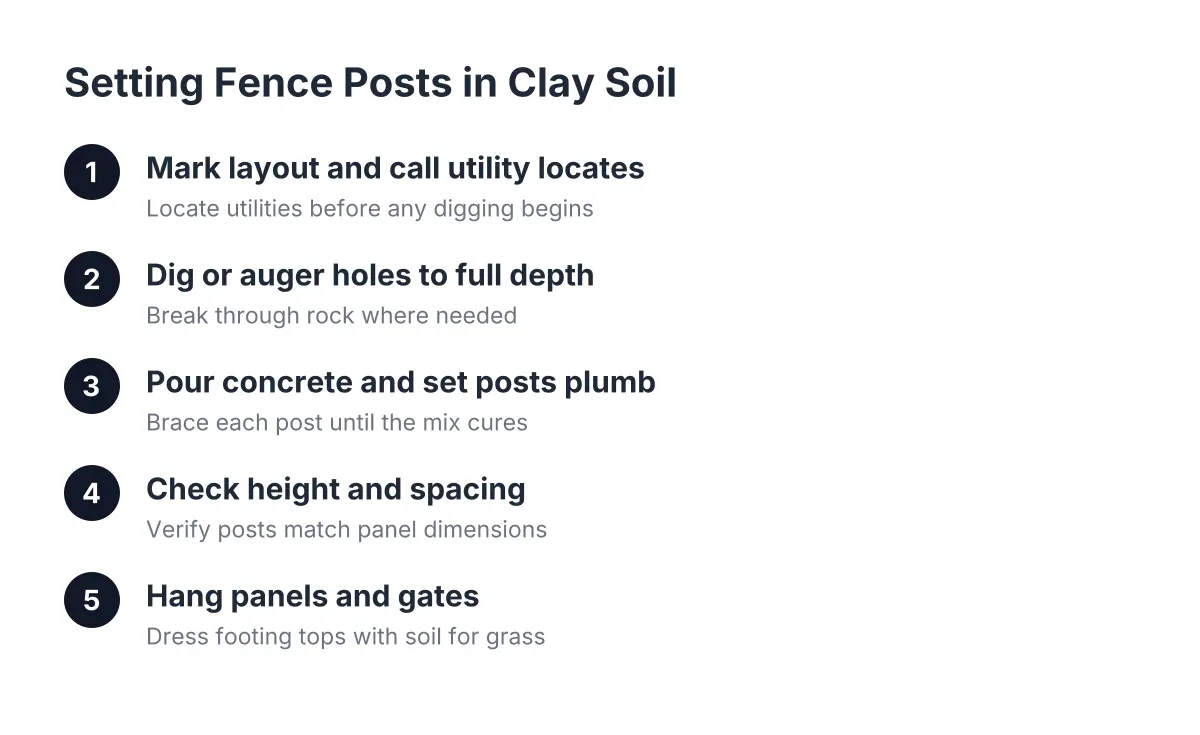
Here is what a proper install sequence looks like:
- Mark the layout and call for utility locates before any digging.
- Dig or auger each hole to full depth, breaking through rock where needed.
- Pour concrete and set each post plumb, bracing it until the mix cures.
- Check post height and spacing against the panel dimensions.
- Hang panels and gates, then dress the tops of the footings with soil.
If a post still sticks up above the planned height after setting, it usually means the hole was not dug deep enough. Catching that before the concrete cures is cheap. Catching it after panels are hung is not.
What does professional wrought iron fence post installation include?
Professional wrought iron fence post installation includes layout, digging, concrete footings, setting posts plumb and in line, and hanging the panels and gates that attach to them. Most fence installation quotes also cover hauling away spoil dirt and old fencing. Rock excavation, old footing removal, and survey work are often priced separately, so ask up front.
That last point matters in Knoxville. Suppose a crew hits ledge rock two feet down on three holes along a ridge lot in the foothills. Breaking through takes extra time and sometimes a demolition hammer, and many fence companies bill that as an add-on. A fair quote names the rock clause in writing instead of surprising you on the final invoice.
Gate installation deserves its own line item too. Gate posts carry constant swinging weight, so they need larger footings than line posts. This is doubly true for a pool gate, which must self-close and self-latch to meet swimming pool fence rules.
How do I know where my property line is before the posts go in?
You confirm your property line before posts go in by checking your plat, locating existing survey pins, or hiring a licensed surveyor to mark the corners. A fence crew builds where you tell them to build; they do not settle boundary questions. Getting the line marked first protects you from paying to move a fence later.
If you and your neighbor disagree about the line, a survey is the cheapest insurance you can buy. It costs money on top of the fence, which stings, but relocating a concreted wrought iron fence post line costs far more. Posts concreted within the past year are much harder to pull than old loose ones, so a placement mistake in iron is expensive to undo.
A few practical steps keep the peace:
- Talk to the neighbor before digging starts, even if you are building fully on your side.
- Set the fence a few inches inside your line so footings do not cross it.
- Keep the survey and the installation contract together as documentation.
- Check HOA rules and any Knoxville or Knox County setback requirements before you sign.
For true legal disputes over a shared fence or an encroachment, consult a surveyor or attorney. A fence company can build to the marked line, but it cannot rule on where that line legally sits.
Is wrought iron worth it compared to aluminum for rental properties?
Wrought iron costs more than aluminum up front but resists impact and sagging better, which matters at rentals with tenant turnover, pets, and mowers bumping the fence. Aluminum is lighter, never rusts, and installs faster. For a landlord deciding on cost per door, iron fits street-facing frontage while aluminum or chain link often wins in back yards.
For example, say a landlord owns a duplex in North Knoxville with a short decorative run along the sidewalk and a long back boundary. In that scenario, a wrought iron fence with cast iron post toppers on the street side adds curb appeal for listings, while chain link handles the rear at a lower cost. Iron does need periodic rust prevention at the base of each post, so budget for repainting every few years.
Can I set wrought iron fence posts myself in this soil?
You can set a short run of posts yourself if your soil cooperates, but Knoxville's clay and shallow rock stop most DIY installs at the digging stage. Rental augers bounce off rock, and hand-digging a dozen full-depth holes in dry clay is brutal. Heavy iron panels also need two people and exact post spacing to hang square.
Call a pro when any of these apply: you hit rock in the first test hole, the run crosses a slope, the fence includes a gate, or the layout sits near a disputed line. Sloped lots are common in the East Tennessee foothills, and stepping or raking iron panels down a grade takes layout experience that is hard to fake on a first attempt.
Repairs are a separate question. A leaning or heaved post can sometimes be reset, and in difficult spots an installer can reinforce a post with a steel pipe core rather than replace the whole footing. Fence repair on one or two posts is usually cheaper than most owners expect, so get it looked at before the lean spreads to the panels.
How do I choose a wrought iron fence installer in Knoxville, TN?
Choose a wrought iron fence installer in Knoxville, TN by asking how deep they set posts, how they handle rock, and whether footings are included in the written price. A fair quote lists post depth, concrete per hole, rock excavation terms, and gate hardware. Vague line items like "install fence" with no footing detail are a warning sign.
Three questions sort serious installers from the rest:
- How deep do you dig in clay, and what happens to the price if you hit rock?
- Will you set the fence inside my surveyed line, and do you require pins or markings first?
- What is the footing spec for gate posts versus line posts?
Timeline-wise, most residential iron runs take a few days once materials arrive, with concrete cure time built in before panels hang. Custom decorative panels and gates can add lead time, so ask about material availability when you compare 2026 quotes. Knoxville Fence Builders walks property owners through these cost factors, post-setting details, and placement questions before any digging starts; if you are ready to get a number for your lot, request a free quote and have your survey or plat handy.
If you need fence installation, Knoxville Fence Builders can help.
Prefer to talk it through? Call (865) 419-3997 — a quick call is usually the fastest way to get a straight answer for your situation.