
Wrought Iron vs. Aluminum vs. Steel Fence Durability in East Tennessee: A Guide
If you have already decided on a metal fence for your property, the next question is which metal actually holds up here. A wrought iron fence looks the part, but true wrought iron, modern ornamental steel, and powder-coated aluminum behave differently in East Tennessee's freeze-thaw winters, heavy spring rain, and clay or rocky soil. This guide walks you through the decision step by step so you pick the metal that matches your land, your footage, and your budget, then get it installed right the first time.
This matters double if you are fencing more than a backyard. On several acres outside Knoxville, or along the perimeter of an HOA pool area or commercial lot, the per-foot difference between these three metals multiplies fast. So does the cost of choosing wrong.
Step 1: Know What Each Metal Actually Is
Start by sorting out the terms, because fence companies and search results mix them constantly.
True wrought iron is hand-worked solid iron. It is heavy, dense, and the material behind the classic look people picture when they search for a wrought iron fence near me. Today, most of what gets sold under that name is actually one of the other two options below.
Ornamental steel is the modern standard-bearer. Panels are welded or assembled from tubular or solid steel, then powder coated. It delivers most of the strength and nearly all of the look of iron at a lower price per foot.
Aluminum is the lightest of the three. It mimics the picket-and-rail look of iron, cannot rust, and costs less to install on long runs. The trade-off is rigidity; a determined livestock animal or a falling limb will bend aluminum before it bends steel or iron.
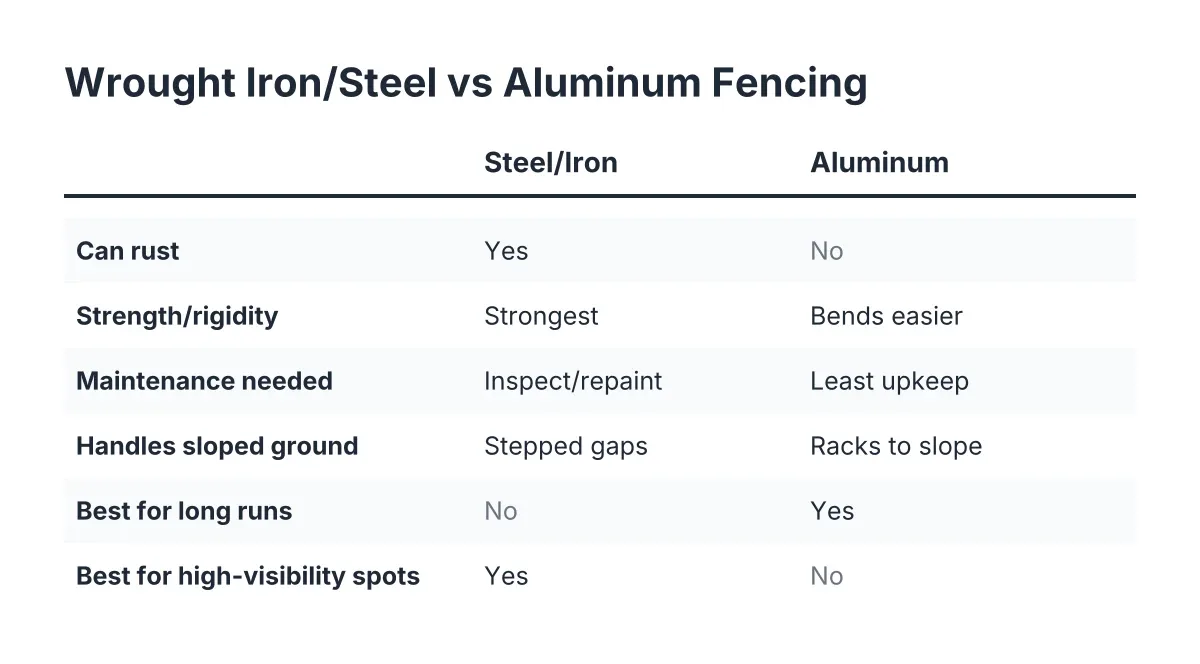
Here is the short version of how they compare on durability in our climate:
- Wrought iron: strongest and heaviest, but bare iron rusts and needs repainting every several years to stay sound.
- Steel: near-iron strength with a factory powder coat that resists rust until the coating is scratched or chipped.
- Aluminum: cannot rust at all, needs the least upkeep, but dents and bends more easily under impact.
Step 2: How Wrought Iron Fences Handle East Tennessee Conditions
Next, weigh how each metal handles the ground and weather it will live in. East Tennessee is humid, gets heavy spring rain, and cycles through freeze and thaw all winter. Moisture is the enemy of iron and steel; neither bothers aluminum.
For iron and steel, that means coating condition decides lifespan. A powder-coated steel fence stays rust-free as long as the coating stays intact. Once a mower rock or a dog chain scratches it, moisture gets to bare metal and rust starts spreading. Plan on inspecting and touching up every year or two.
Soil matters just as much as weather. Knoxville-area clay holds water around posts, and rocky ground in the foothills complicates digging. Heavy iron and steel sections need deeper, wider footings than aluminum, which raises labor on sloped or rocky lots. Aluminum panels also rack, meaning they can follow a slope without stepped gaps at the bottom; that is a real advantage for dog containment on uneven acreage.
Step 3: Decide Where a Wrought Iron Fence Earns Its Price
A true wrought iron fence, or heavy ornamental steel built to look like one, earns its premium in specific places. Be honest about whether your project is one of them.
It makes sense at high-visibility, high-stakes locations: an HOA community entrance, a pool enclosure where you want decorative iron fence panels paired with a self-closing pool gate, or the street-facing front of a commercial property. In those spots, the upscale look and the strength justify the cost, and the footage is short enough that per-foot price does not wreck the budget.
It rarely makes sense for long perimeter runs. Suppose a property owner in Loudon needs to fence several acres for two dogs. Iron or steel across that whole perimeter would cost multiples of what the containment job requires. In that scenario, the smarter plan is usually a hybrid: decorative metal across the road-facing front where it shows, then chain link fence or a split rail fence with wire mesh for the long back and side runs. One fence company can price both in a single quote, and the blend contains the dogs without paying showcase prices on footage nobody sees.
Step 4: Plan the Gates Before the Fence
Gates fail before fence lines do, so plan them early. An iron gate is heavy, and that weight works against you over time. Freeze-thaw movement in clay soil shifts gate posts, and a shifted post means a gate that drags, binds, or will not latch.
Therefore, insist on these specifics when you order:
- Gate posts set deeper and in larger concrete footings than line posts.
- Hinges rated for the actual gate weight, not generic hardware.
- Self-closing hinges and a self-latching mechanism on any swimming pool fence gate, with the latch mounted at the height your local code requires.
- Latches and drop rods you can operate with one hand, which matters for drive gates on acreage.
For pool enclosures specifically, the gate is the compliance point inspectors check first. If the metal fence around your community pool is aging, replacing the pool gate hardware correctly is as important as the panels themselves.
Step 5: Get the Installation Details in Writing
A good installer's scope should cover more than panels and posts. Before you sign, confirm the quote includes utility line marking, post hole depth and concrete specs for your soil, how the crew will handle rock if the auger hits it, slope handling (racked panels versus stepped panels), gate hardware by name, and haul-away of any old fence. Core-drilling into rock, tear-out of existing fence, and custom iron parts such as finials or arched tops are the items most often billed as extras, so ask up front.
On cost, avoid anyone who quotes your whole project over the phone without seeing the ground. For context on how metal compares with other materials, according to Angi, wood fencing costs about $11 to $45 per linear foot for professional installation, and vinyl fence installation starts around $15 to $40 per linear foot. Ornamental metal generally sits above those ranges, with true iron at the top. The honest cost drivers are footage, slope, rock, gate count, and panel style, and a fair quote itemizes each one.
Timeline depends on material. Stock aluminum and steel panels can often be installed within weeks of approval, while custom iron work takes longer because panels are fabricated to order. HOA boards working through a bid cycle should build fabrication time into the capital project schedule.
When to Call a Pro Instead of DIY
Homeowners can handle small jobs on an existing metal fence: sanding rust spots, repainting, tightening loose iron parts, or adjusting a sagging gate hinge. Full installation is a different story. Heavy panels, deep footings in rocky ground, welded repairs, and code-compliant pool gates all belong with a local fencing contractor. Call sooner rather than later if posts are leaning, rust has eaten through a rail, or a pool gate no longer self-latches; that last one is a safety issue, not a cosmetic one.
Step 6: Choose the Right Installer for Metal Fencing
Finally, vet the installer, not just the price. When you search for iron fence installers near me, most results will be companies installing ornamental steel or aluminum, which is fine as long as they say so plainly. Ask these three questions:
- Is this true wrought iron, welded steel, or aluminum, and what exactly is the coating?
- How will you set posts in my soil, and what happens to the price if you hit rock?
- How do the panels handle my slope, racked or stepped?
Clear, specific answers signal a crew that has worked East Tennessee ground before. Vague answers signal change orders later. Also ask whether they handle fence repair on metal, because a company that fixes these fences knows exactly how they fail.
One honest limitation: if your property has severe slopes, solid rock near the surface, or a historic iron fence you want restored rather than replaced, bring in a professional to walk the line before you commit to any material. Some sites genuinely need engineering judgment that no article can replace.
If you are weighing iron, steel, or aluminum for a Knoxville-area property, whether that is acreage in the county or a community pool enclosure, Knoxville Fence Builders can walk the site, explain the cost factors for your specific ground, and give you a free quote with each option priced side by side. Reach out to schedule a site visit.
If you need fence installation, Knoxville Fence Builders can help.
Prefer to talk it through? Call (865) 419-3997 — a quick call is usually the fastest way to get a straight answer for your situation.