
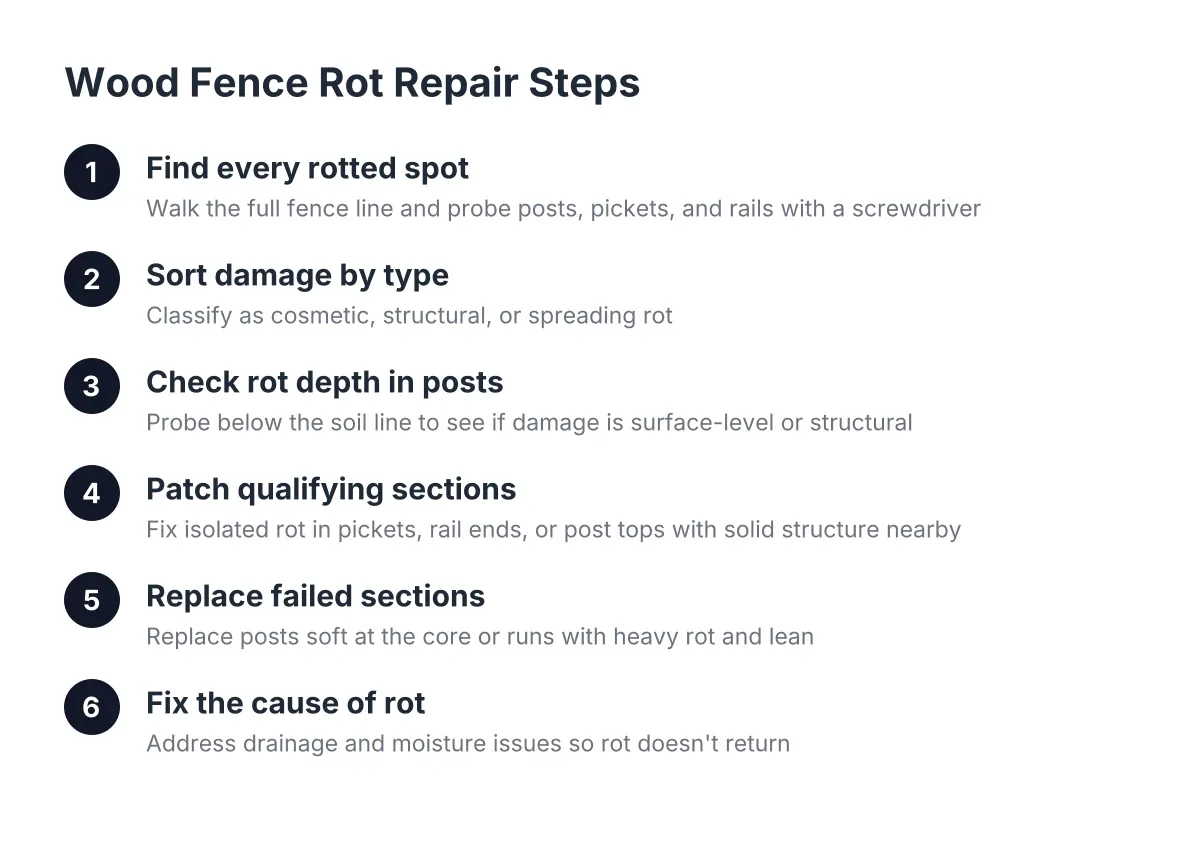
Wood Fence Rot Repair: When to Patch a Section and When to Replace It
Rot never announces itself. One week the fence looks fine from the porch, the next week a dog leans on a panel and the whole section wobbles. If you are staring at a soft, gray post or a line of crumbling pickets, the real question behind wood fence rot repair is not "can this be fixed." Almost anything can be fixed. The question is whether patching that section makes financial sense, or whether you are pouring money into wood that is going to fail somewhere else next spring.
This guide walks through how to make that call the way a local fencing contractor would: find the rot, figure out how deep it goes, and then decide patch versus replace based on what you find. East Tennessee conditions matter here. Clay soil holds water against posts, spring rain keeps the bottom of pickets wet for weeks, and freeze-thaw winters work moisture into every crack. A fence on a sloped, rocky lot outside Knoxville ages differently than the same fence on a flat suburban lot, and the repair decision should reflect that.
Step 1: Find Every Rotted Spot, Not Just the Obvious One
Walk the full fence line before you fix anything. Rot rarely shows up in one place only, because the conditions that caused it, poor drainage, ground contact, trapped moisture, usually exist along the whole run. On acreage, this walk might take a while. Do it anyway, because the patch-versus-replace decision depends on how widespread the damage is, not how bad one post looks.
Bring a flathead screwdriver and check these spots:
- The base of every post, right at ground level, where clay soil holds water against the wood
- The bottom edge of pickets, especially in low spots where rain pools after a storm
- Post tops, where end grain soaks up rain if the post was never capped or cut at an angle
- Rail ends where they meet posts, since fasteners create entry points for water
- Anywhere the fence touches soil, mulch, or leaf piles
Press the screwdriver into the wood. Solid wood resists. Rotted wood gives way like a stale sponge, even when the surface paint looks fine. That last part trips up a lot of homeowners; posts often fail from rot while the panels above them have been repainted and maintained for years. Paint protects the face of the fence. It does nothing for the buried portion of the post.
Step 2: Sort the Damage Into Cosmetic, Structural, or Spreading
Everything you flagged in Step 1 falls into one of three buckets, and the bucket determines the fix.
Cosmetic rot lives in pickets and the visible faces of rails. A rotted picket affects nothing but itself. You can swap individual pickets all day without touching the structure of the fence.
Structural rot lives in posts and the rails that carry the pickets. A post rotted at ground level is holding the fence up by habit. The next heavy wind or a dog hitting the panel at speed finishes the job. This is the rot that decides whether you patch or replace.
Spreading rot is rot with a cause still in place. A picket that rots because it sits in a drainage swale will rot again after you replace it. Fix the condition, not just the board, or you will repeat this project every few years.
How Deep Does the Rot Go in Each Post
Depth is the whole game for posts. Probe around the full circumference at ground level and a few inches below the soil line if you can clear it. Surface softness a quarter inch deep on an otherwise solid post is weathering, and the post has years left. Softness that runs deep into the center, or a post that moves when you push the panel, means the structural wood is gone.
Here is a detail worth knowing about older fences: concrete poured tight around a wood post can trap moisture against the wood below grade. The post looks fine above the concrete collar and is mush just beneath it. If your fence was set that way, assume the rot below grade is worse than what you see above it.
Step 3: Patch What Qualifies for Wood Fence Rot Repair
Patch-level wood fence rot repair makes sense when the rot is isolated, the structure around it is sound, and the cause is fixable. In practice, that covers three situations.
Rotted pickets with solid rails and posts. Unscrew or pry off the bad pickets, replace them with matching boards, and move on. If the bottoms rotted from ground contact, trim the new pickets so they clear the soil, or add a pressure-treated pine rot board along the bottom of the run. That rot board takes the moisture hit so the pickets above it stay dry, which does more for the fence's lifespan than most homeowners expect.
Rotted rail ends with solid posts. You do not have to replace a whole rail because the last few inches failed. Overlap a scab rail segment across the joint, spanning the old rail end and the sound wood beside it, and fasten it with brackets. Done right, this ties the old and new sections together structurally and the fence is as stiff as it was new.
Rotted post tops with solid bases. Water enters through the exposed end grain and works down. If the rot is confined to the top few inches, cut the post below the damage, seal the fresh cut, and cap it. The post keeps doing its job.
One honest limitation: epoxy fillers and rot restorers you see marketed online can firm up a cosmetic void, but they do not restore structural strength to a post that is soft at the ground line. Filling a load-bearing post and calling it fixed is how fences end up flat in the yard after the next storm.
Step 4: Replace Sections Where the Structure Is Gone
Replacement is the right call when the rot is in the bones of the fence. Draw the line here:
- Any post that is soft through its core at ground level, or that moves when you push the panel
- Any run where more than about a third of the pickets or rails are rotted; at that point piecemeal repair costs more than new sections
- Rails sagging because the wood can no longer hold fasteners
- Fence sections where rot and lean show up together, since lean usually means failed posts, not failed panels
However, replacing a post does not always mean digging out the old concrete footing. The first instinct for most homeowners is to rip out the post, bust out the footing, and start over. On rocky East Tennessee ground, that excavation is often the most expensive and miserable part of the job. There is a better route in many cases: cut the rotted post off above the deteriorated section and set a new steel post into the original concrete footing. The footing you already paid for keeps working, the fence stops sagging, and the money you spend now carries forward instead of being thrown away when the fence eventually gets rebuilt.
For example, suppose a property owner near Loudon has a long perimeter run with six failed posts out of forty. Full post-and-footing replacement on that rocky ground might mean a day of demolition per cluster of posts. In that scenario, steel post inserts in the existing footings could rescue the run for a fraction of the effort, and the remaining sound sections stay untouched. For context on what full replacement costs instead, a wood fence runs about $20 to $50 per linear foot installed according to HomeGuide, which is why saving sound sections matters on a long run.
When Rot Repair on a Wood Fence Stops Making Sense
Rot repair stops making sense when the whole fence is at the same age and failing for the same reason. If the posts were all set the same year in the same wet clay, the six that failed this year preview the rest. Patching your way through a fence that is failing systemically costs more over three years than replacing it once. At that point, get a repair quote and a replacement quote side by side and compare the math honestly. A fence company that offers fence repair services should be willing to tell you when repair is the worse deal.
If the fence also leans across a slope, or posts heaved out of plumb after a freeze-thaw winter, bring in a professional before deciding. Slope and frost movement change what a sound repair looks like, and misreading them wastes money.
Step 5: Fix the Conditions That Caused the Rot
A fence repair that ignores the cause is a subscription, not a fix. Before you call the project done, handle the conditions that rotted the wood in the first place.
- Break the wood-to-ground contact. Trim pickets above the soil line and add a pressure-treated rot board under cedar or pine pickets so they cannot wick up pooled water.
- Improve drainage at post bases. Pull mulch and soil away from posts, and regrade low spots where rain sits for days after a storm.
- Cap or angle-cut post tops so rain sheds instead of soaking into end grain.
- Stain both sides of the fence, not just the side facing the house. Sealing both faces blocks moisture from both directions and meaningfully extends the fence's life.
- Recheck the line each spring. In 2026 and every year after, one walk with a screwdriver after the last freeze catches soft spots while they are still a picket problem, not a post problem.
The patch-versus-replace call comes down to where the rot lives. Pickets and rail ends, patch with confidence. Posts gone at the core, replace, and look hard at steel inserts before you dig out a single footing. Make that distinction early and wood fence rot repair becomes a manageable weekend project instead of a slow, expensive surrender to the weather.
If you need fence repair, Knoxville Fence Builders can help.
Prefer to talk it through? Call (865) 419-3997 — a quick call is usually the fastest way to get a straight answer for your situation.