
Decorative Wrought Iron Fence Panels: How to Choose Styles and Options
You have decided on a decorative wrought iron fence, and now the real questions start. Which panel style fits your yard? What toppers and finials actually look good on a Knoxville lot? And how do you plan a layout so the finished fence looks intentional instead of pieced together? This guide walks you through the decisions step by step, so you can pick panels, parts, and a layout with confidence before an installer ever sets a post. Choosing from among the different decorative fence panel styles available lets you match ornament to function.
Wrought iron sits a step above standard aluminum fencing in weight, feel, and curb appeal. It costs more and asks for more upkeep, but for front yards, pool areas, and community entrances, the ornamental options are the reason people choose it. Here is how to work through those options in order.
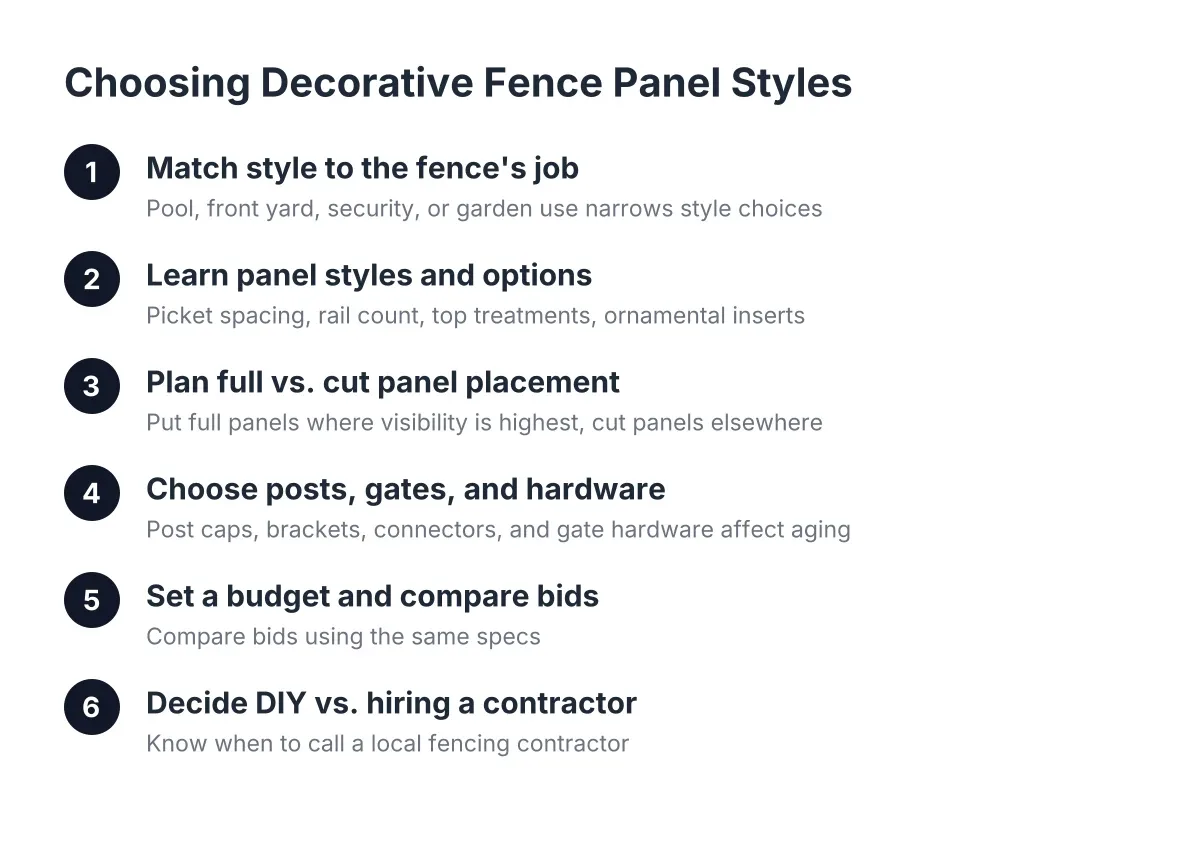
Step 1: Match the Panel Style to the Job the Fence Has to Do
Start with function, not looks. A decorative wrought iron fence can do several different jobs, and the job narrows your style choices fast.
- Pool enclosure. If the fence surrounds a swimming pool, code requirements come first. You need a minimum height, limited gaps between pickets, and a self-closing, self-latching pool gate. Flat-top or smooth-top panels are the safer pick here; pointed finials near a pool area are a bad match for kids climbing out of the water.
- Front yard boundary. This is where ornamental details earn their keep. Spear tops, scrollwork, and decorative rings all work because nobody is climbing this fence, and the street-facing side is what everyone sees.
- Perimeter security for a commercial lot or HOA common area. Taller panels with pressed-point or spear toppers discourage climbing while still looking finished. Property managers replacing an aging chain link fence around a community amenity often step up to iron for exactly this reason.
- Garden or accent fencing. Shorter decorative panels define a space without blocking views. These carry the most ornamental freedom since safety and security barely apply.
Write down which job your fence has to do. Every choice after this one gets easier.
Step 2: Understanding Decorative Fence Panel Styles and Options
Panel design is the biggest visual decision. Most decorative wrought iron fence panels fall into a handful of families, and knowing the names helps you compare quotes line by line instead of guessing. The specific decorative fence panel styles you can choose include flat-top, spear, arched, and ornamental inserts.
Picket spacing and rail count
Two-rail panels have a top and bottom rail with plain vertical pickets between them. They read clean and modern. Three-rail panels add a middle or lower rail, which stiffens the panel and adds a traditional look. For pool fencing, confirm the picket spacing meets code; decorative does not excuse a gap a toddler can slip through.
Top treatments and toppers
Decorative wrought iron fence toppers change the whole character of the fence:
- Flat top: pickets stop at the top rail. Clean, safe, and the usual choice around pools.
- Spear or finial top: pickets extend past the top rail and end in a point or cast finial. Classic, formal, and climb-resistant.
- Staggered spear: alternating picket heights create rhythm along the top line.
- Arched or scalloped panels: the top line curves between posts, either dipping down (concave) or rising up (convex). This reads upscale from the street with no extra material, only more fabrication and installation care.
- Rings and scrollwork: circles or scroll inserts between the top rails. These suit older in-town Knoxville homes where the architecture supports ornament.
Ornamental inserts and accents
Beyond toppers, you can add cast pieces like rosettes, collars on the pickets, or scroll panels at gates. A practical rule: concentrate ornament where people actually look, at the gate, the front corners, and the entrance. Keep runs along the side property line simpler. You save money and the fence looks designed rather than cluttered.
Step 3: Plan Where Full Panels and Cut Panels Will Land
This step separates a sharp installation from a sloppy one, and most first-time buyers never think about it. Fence lines almost never divide evenly into standard panel widths. Someone has to decide where the cut, shortened sections go. How you arrange decorative fence panel styles across your lot line affects the whole visual outcome.
The rule good installers follow: put full panels in the most visible stretches, the front yard, the approach to the gate, the run facing the street. Push cut sections to less visible corners or along a side yard. Ask any contractor bidding your job how they handle panel layout. If they have no answer, that tells you something.
In addition, think about which side faces out. Decorative panels are usually finished on both faces, which is one advantage iron holds over a wood privacy fence, where the rail side traditionally faces your own yard. Still, gate hinges, latches, and any bracketry have a better-looking side. Confirm the finished orientation before installation day.
Step 4: Choose Posts, Gates, and the Parts That Hold It Together
Panels get the attention, but posts and parts determine how the fence ages. When you review wrought iron fence parts on a quote, check these items:
- Post caps. Flat, ball, or finial caps on each decorative post. Caps keep water out of hollow posts, which matters through East Tennessee freeze-thaw winters.
- Brackets and connectors. Rackable brackets let panels follow a slope without stair-stepping, a real concern on foothill lots around Knoxville.
- Gate hardware. For a pool gate, self-closing hinges and a self-latching, lockable latch mounted at code height are not optional. For driveway or walk gates, heavier hinges than the catalog minimum pay off; gates take more abuse than any panel.
- Finish. Powder coating over a rust-inhibiting primer is the standard protection. Ask what touch-up process the installer recommends for scratches, since bare iron rusts.
Gates deserve extra scrutiny. A sagging gate is the most common fence repair call on any metal fence, and heavy spring rain plus clay soil movement stress gate posts more than line posts. Deeper footings and larger-diameter gate posts are worth the upcharge.
Step 5: Set a Realistic Budget and Compare Bids on the Same Specs
Wrought iron is a premium material. For context, a wood fence runs about $20 to $50 per linear foot installed according to HomeGuide, and vinyl runs $30 to $60 per linear foot by the same source. Expect true iron, and even heavy ornamental steel, to sit at or above the top of those ranges, with ornament, height, gates, and site conditions driving the final number.
Cost factors that move an iron quote up or down include:
- Panel height and picket thickness
- Topper style and the amount of scrollwork or cast accents
- Number and width of gates, especially automated driveway gates
- Digging conditions, since Knoxville's clay and rocky soil slows post-setting
- Slope, which may require racked panels or custom stepping
- Tear-out of an existing fence
For example, suppose an HOA board is replacing the fence around a community pool. A flat-top, three-rail iron fence with one code-compliant pool gate will bid meaningfully lower than the same footage with spear finials, ring accents, and a double entrance gate with arched scrollwork. When collecting multiple bids, send every fence company the identical spec sheet, panel style, topper, gate count, and finish, so the board compares price instead of guessing at differences.
Step 6: Decide What You Can Handle and When to Call a Local Fencing Contractor
Pre-fabricated ornamental panels tempt handy homeowners, and a short garden accent run on flat ground is a reasonable DIY project. The rest usually is not. Call a professional installer when any of these apply:
- The fence encloses a swimming pool, where gate and spacing codes carry legal weight
- Your lot slopes, which demands racked panels or careful stepping
- You hit rock or dense clay while digging test holes
- The project includes a driveway gate or any automated gate
- An HOA or commercial property needs documented, bid-ready work
One honest trade-off to weigh: a decorative wrought iron fence delivers looks and longevity, but it offers no privacy. If your main goal is screening a backyard from neighbors, a solid wood or vinyl privacy fence does that job better and cheaper, and iron is better saved for the front yard or pool area. Also, true wrought iron needs periodic finish maintenance to stay ahead of rust; if zero upkeep is the priority, aluminum deserves a second look before you sign.
When you interview installers, ask three things. First, how do they set posts in rocky clay soil, and how deep? Second, how will they lay out full versus cut panels on your specific fence line? Third, what is the finish, and what rust warranty or touch-up guidance comes with it? A fair quote itemizes panels, posts, gates, hardware, tear-out, and site conditions, so you can see exactly what each bid includes.
Get Local Eyes on Your Fence Line
Panel style, toppers, gate hardware, and layout all interact with your actual yard, its slope, its soil, and its sight lines. The fastest way to turn this plan into a real number is a site visit from a local fencing contractor who installs ornamental metal fencing in East Tennessee ground conditions. Knoxville Fence Builders can walk your fence line, talk through decorative wrought iron fence panel options against aluminum alternatives, and put together a free quote based on the specs you now know how to ask for.
If you need fence installation, Knoxville Fence Builders can help.
Prefer to talk it through? Call (865) 419-3997 — a quick call is usually the fastest way to get a straight answer for your situation.