
Wrought Iron vs. Aluminum Fence: 8 Durability and Weather Tests for Knoxville Yards
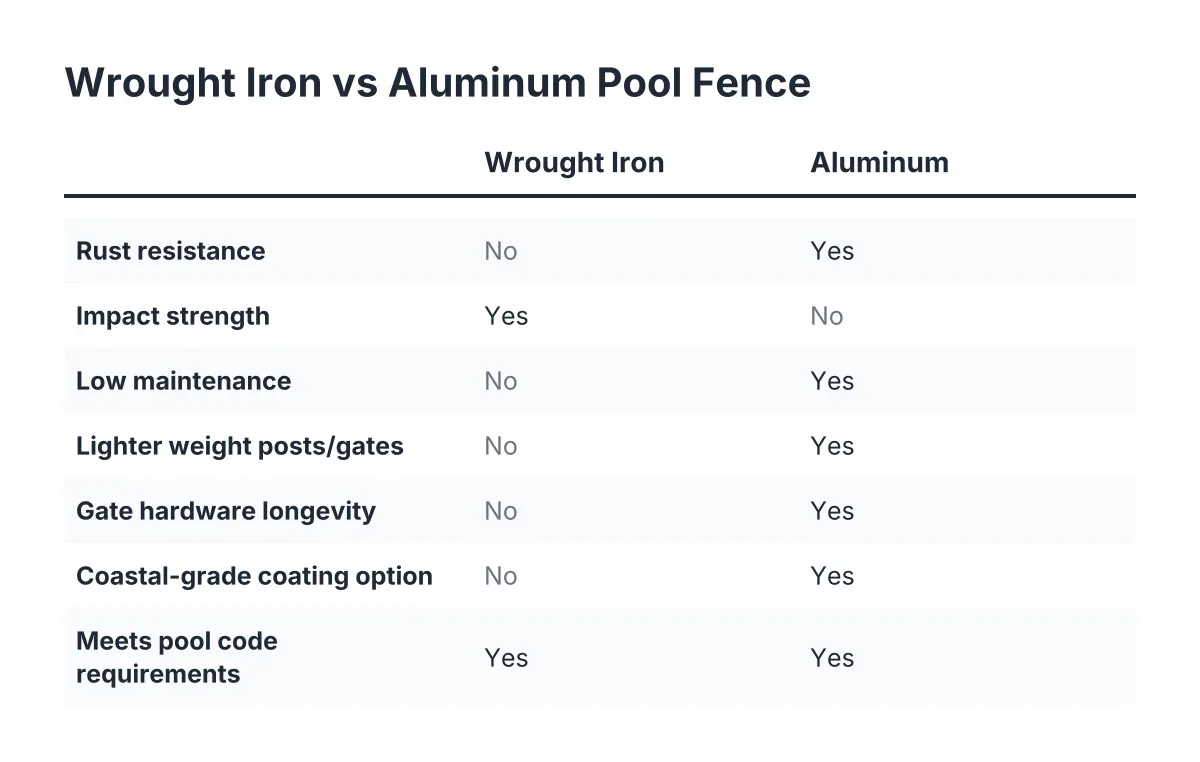
If you are comparing a wrought iron and aluminum pool fence for a Knoxville property, durability is probably the question that matters most. The choice between these materials largely comes down to aluminum pool fence durability over time. Both materials give you that classic metal picket look. Both can meet pool barrier requirements when built to the right height with a self-latching gate. However, they handle East Tennessee weather, clay soil, and years of use in different ways, and those differences decide which one earns its price.
This matters whether you are a parent scrambling to get a swimming pool fence up before an inspection or a landlord who owns several rentals and thinks in cost-per-door. Below are eight durability and weather comparisons that separate the two materials, so you can pick the one that fits your property, your timeline, and your tolerance for maintenance.
1. Rust Resistance: Aluminum Pool Fence Durability Fundamentals
Aluminum does not rust, period. Wrought iron is a ferrous metal, which means it will rust the moment its protective coating gets scratched, chipped, or worn through. In a region like East Tennessee, with heavy spring rain and humid summers, that is not a small difference.
A well-maintained wrought iron fence can last generations, but "well-maintained" is doing real work in that sentence. You will need to inspect the finish, sand rust spots, and repaint on a regular cycle. An aluminum fence with a powder-coated finish asks for none of that. For a landlord with 2 to 15 rental units who cannot repaint fences at every property, aluminum removes a recurring task from the list entirely.
2. Freeze-Thaw Winters and Soil Movement
East Tennessee winters cycle above and below freezing repeatedly, and that movement stresses fence posts more than steady cold would. Both iron and aluminum handle temperature swings well above ground. The difference shows up at the post and footing level.
Iron fencing is heavier, so its posts carry more load and need deeper, beefier concrete footings set in Knoxville's clay and rocky soil. When freeze-thaw cycles shift the ground, a heavy iron panel puts more strain on any post that moves. Aluminum panels weigh far less, so a slightly shifted post is less likely to turn into a sagging section. Proper post depth and drainage around the footing matter more than the metal itself, which is where a local fencing contractor who knows the ground conditions earns their keep.
3. Impact Strength: Iron Wins, but Ask If You Need It
Wrought iron is stronger against direct impact. A mower bumping a picket, a falling limb, or a car tapping a corner post will dent or bend aluminum before it fazes iron. If your fence line sits next to a driveway, an alley, or a pasture, that strength has real value.
For a backyard swimming pool fence, impact strength rarely decides anything. Pool code is about height, picket spacing, climb resistance, and a pool gate that self-closes and self-latches. Aluminum meets all of those requirements. The honest question is whether you are paying for strength you will use or strength that just sounds reassuring.
4. Coastal-Grade Coatings Do Not Exist for Iron the Same Way
Modern aluminum fencing comes with factory powder coating that bonds to a metal that cannot rust underneath it. Even if the coating chips, the exposed aluminum oxidizes into a dull gray layer that protects itself. Iron works the opposite way. A chip in the paint exposes raw steel-based metal, and rust starts spreading under the surrounding finish where you cannot see it.
As a result, the maintenance clock on iron never stops. In Knoxville's humidity, a neglected chip can become a bleeding rust streak within a season or two. If you want the wrought iron look without the paint-cycle commitment, wrought iron style aluminum fence panels have become the standard answer in 2026, and most people cannot tell the difference from the sidewalk.
5. Pool Gates: The Component That Fails First
Here is where the Pool-Code Scramble matters. Gates fail before panels do, on every fence material. A pool gate must self-close and self-latch to pass inspection, and the hardware doing that job works against the weight of the gate every single day.
An iron gate is heavy. That weight strains hinges and spring closers, and over years of East Tennessee rain and freeze-thaw movement, a heavy gate is the one most likely to start dragging, stop latching, and quietly fall out of compliance. An aluminum wrought iron fence gate weighs a fraction as much, so self-closing hardware lasts longer and keeps latching reliably. If a toddler or grandkid is the reason you are reading this, the gate that still latches itself in year ten is the one that matters.
Suppose a homeowner in Farragut just had a home inspection flag the pool barrier, with 30 days to fix it. In that scenario, aluminum usually wins on timeline alone: panels and gates are stocked locally, while true iron often means fabrication lead times that blow past the deadline.
6. How Aluminum Pool Fence Durability Compares Over Time
With honest maintenance, wrought iron can outlast nearly any fence material; some iron fences from a century ago still stand. Without maintenance, rust can shorten its life below that of a basic chain link fence. Aluminum lands in a steadier middle: decades of service with little attention beyond an occasional rinse and hardware check.
Therefore the real comparison is not iron versus aluminum. It is maintained iron versus unmaintained iron versus aluminum. Be honest about which owner you will be. A landlord juggling tenant turnovers across Knoxville-area suburbs almost never gets to the fence-painting line on the to-do list, which is why low-maintenance materials keep showing up in rental portfolios alongside vinyl fence and chain link fence options.
7. Repairs and Replacement Parts
Aluminum fencing is modular. Damaged pickets, rails, and panels unbolt and swap out, and parts stay available for years because manufacturers standardize their lines. Wrought iron fence parts are a different story. Decorative wrought iron fence panels are often custom-fabricated or welded, so a repair may mean cutting, welding, and refinishing on site rather than swapping a part.
For example, say a tenant's dog bends two pickets at a rental in Powell. An aluminum section is an afternoon fence repair with a stocked panel. The same damage on iron could mean finding a fabricator, matching the picket profile, and repainting the section to blend. Multiply that across a portfolio and the repair-cost gap widens fast.
8. What Each One Costs Over Time, Not Just at Install
Is aluminum fence cheaper than wrought iron? Almost always, both upfront and over the life of the fence. Iron costs more because it uses more raw material, requires heavier footings, and often involves custom fabrication. Then the maintenance cycle adds painting and rust treatment costs that aluminum never incurs.
Rather than quote figures that go stale, weigh these cost factors when you compare bids:
- Material weight and footing requirements. Heavier iron means more concrete and more digging, which costs more in Knoxville's clay and rocky soil.
- Fabrication versus stocked panels. Custom decorative work on iron adds labor; wrought iron looking aluminum fence panels come ready to install.
- Slope on the lot. Foothill lots common around Knoxville need racked or stepped panels, and aluminum racks more easily on grade.
- Gate count and hardware. Every self-latching pool gate adds hardware cost, and heavier gates need stronger, pricier hardware.
- Maintenance over 15 to 20 years. Paint, rust treatment, and hinge replacement on iron; near-zero on aluminum.
For context on how metal fencing compares to other materials, wood fence installation runs about $11 to $45 per linear foot professionally installed, while vinyl starts around $15 to $40 per linear foot, according to Angi. Metal picket fencing generally sits above those ranges, with true iron at the top of the market.
Which One Should You Choose?
Choose aluminum if your priorities are a compliant swimming pool fence on a deadline, low upkeep across rental properties, or the iron look without the paint cycle. Choose true wrought iron if you own a historic in-town Knoxville home where authentic ironwork fits the architecture, you value maximum strength, and you will commit to the maintenance.
One caution either way: pool barrier requirements involve specifics on height, picket spacing, gaps under the fence, and gate latch placement, and sloped yards complicate all of them. Before you buy panels or schedule an inspection, have a fence company that handles pool gate installation walk the yard and confirm the layout meets code. In the material choice, the metal is only half the job; the installation on your actual ground is the other half.
If you need fence installation, Knoxville Fence Builders can help.
Prefer to talk it through? Call (865) 419-3997 — a quick call is usually the fastest way to get a straight answer for your situation.